What is Device Provisioning?

Cam Summerson
|
Try Esper for Free
MDM Solutions for Android and iOS

Provisioning is the process of setting up new IT resources, either locally or in the cloud. There are many different types of provisioning, depending on the type of system being deployed. Network provisioning, server provisioning, user provisioning, and device provisioning are all common examples of provisioning. It’s a part of the deployment process — the collection of steps required before a device is ready for use — for distributing new hardware to end users.

Here, we’ll focus on edge device provisioning. Yes, the concepts apply broadly, but device provisioning matters most when you’re rolling out devices at scale and you need a repeatable, auditable way to get every endpoint into the right state: secure, consistent, and ready for its job.

Why Provisioning Matters In Enterprise Rollouts

Edge devices are increasingly critical to everyday business operations. Everything from AI-enabled robotics for manufacturing or logistics, POS systems and kiosks for restaurants and retail, or small handheld devices in health tech, devices are embedded into all kinds of businesses. Which means that the way you roll out and onboard new devices has a direct impact on how fast your business can expand. Specifically, provisioning speed and cost affect the ROI of edge devices, and can delay store readiness and impact sales. Security and accuracy matter, too: Inconsistent devices create an inconsistent customer experience and can damage brand reputation.

Learn More: The Hidden Costs of Scaling Edge Fleets >

What Does Device Provisioning Encompass? 

Edge device provisioning is the process of turning generic hardware into a role-specific, production-ready device.

Sometimes that means basic setup, such as connecting to wireless networks or enforcing simple system controls like speaker volume limits. In more complex deployments, provisioning can include installing applications or AI models, applying role-based configurations. It can also mean fully replacing the operating system (device imaging) to support highly specialized workflows or add a custom OS.

For organizations using device management platforms, the first step in the provisioning process begins with enrollment (also called device onboarding).

Provisioning Step 1: Device Enrollment

Device enrollment is how a device is formally registered into an organization’s management environment.

In practice, enrollment establishes the device as managed — creating the trust relationship that allows IT teams to apply policies, push configurations, and maintain ongoing control. While enrollment is usually the first step, some deployments may introduce additional steps — such as flashing a custom OS image — before enrollment occurs, depending on the use case.

Within an MDM platform, enrollment is what brings the device under management (often called onboarding). 

Android supports multiple enrollment paths: including QR-based setup, Android Enterprise, and Google Zero-Touch Enrollment, allowing teams to choose the approach that best fits their scale and operational model.

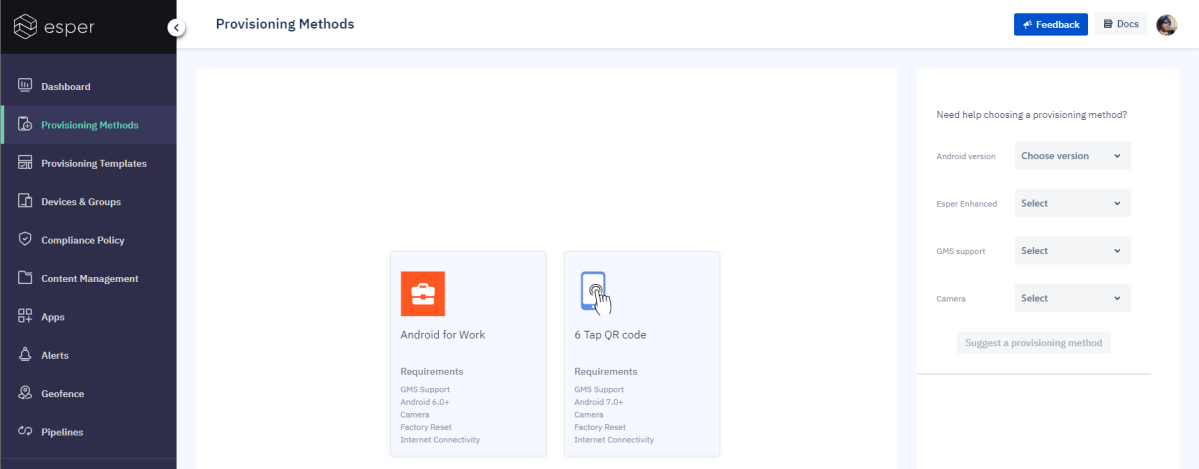
For example, when enrolling an Android device into Esper using the 6-tap QR method, the device is factory reset and initialized. During setup, tapping the screen six times opens a QR scanner, which reads a blueprint-specific code generated in the Esper console. From there, enrollment completes automatically and the device transitions into managed state.

Provisioning Step 2: Device Configuration

If you’ve been researching provisioning, you’ve probably also read about device configuration. In many provisioning scenarios, the next step is configuration. In these situations, provisioning is the step that prepares the hardware to do the thing you want it to do, and configuration is the process that sets it all up to your specifications. You can think of it as building a new PC — provisioning is installing the operating system, while configuring is installing all of your apps and applying custom settings. 

In many provisioning scenarios, the last step of provisioning is to launch the configuration software. In our case, however, we make it much simpler. 

Esper provisioning methods

Provisioning Step 3: Software Deployment

Software deployment — aka making the software available to the end user can mean pushing an application or updated application to endpoints like computers or tablets is usually the last step of the edge device provisioning process. 

Once a device is enrolled in the company’s management system, the device management layer usually pushes the right software updates, or any necessary applications or files that the device needs to run properly.

This is where consistency and speed and important to large scale device fleets: Every location should get the same experience, with predictable rollout timelines, reducing the risk of setup errors, delays, or support calls.

Common Ways to Enroll and Provision Edge Devices:

Manual Provisioning: 

Manual provisioning and deployment requires IT staff to manually turn on, configure, and download updates and applications by hand, one device at a time. 

While manual provisioning works on any device, at scale, manual provisioning is slow and puts consistency and security at risk. But there are times when it is necessary to deploy specialty hardware or legacy devices. 

6-Tap (QR) Code: 

6-tap (QR code) provisioning is a simplified enrollment option for Android devices. As the name implies, it’s initiated with six taps on the device screen, which prompts a QR code. Once the code is scanned, the device can be enrolled into a management platform, with pre-defined configuration and application deployments. 6-tap, as the name implies, is still hands-on, but simplifies manual enrollment and helps standardize configuration and deployment to reduce errors and inconsistencies. 

6-tap provisioning is only Android GMS Devices running Android 7 and above, and a built-in camera is required.

Zero-Touch Enrollment: 

Zero-touch enrollment (ZTE): With zero-touch enrollment, devices can be pre-enrolled into a management solution, enabling automatic enrollment, which can trigger basic OS and patches and baseline security settings. 

Zero-touch enrollment automates the enrollment process, making it better than manual or 6-tap enrollment, but configuration and app deployment can still be manual processes. To reduce manual in-house work, many organizations dropship new devices to third-party kitting services to apply and confirm device security and access policies, settings, and ensure that all necessary applications are 

deployed. 

Zero-Touch Enrollment is Available on Android Devices. 

Knox Mobile Enrollment (KME):

Knox Mobile Enrollment (KME) is Samsung’s zero-touch provisioning solution for Samsung Galaxy devices. With KME, devices can be pre-registered at purchase and automatically enrolled into a device management platform the first time they power on.

KME removes the need for manual setup by allowing IT teams to enforce management, apply security policies, and deploy configurations during initial device startup. This helps ensure consistent, secure deployments while reducing hands-on effort and setup time. 

Knox Mobile Enrollment is only available on supported Samsung devices purchased through authorized resellers and requires integration with a compatible device management solution.

Apple Business Manager (ABM):

Apple Business Manager is Apple’s device provisioning and deployment framework for iOS, iPadOS, and macOS devices. With ABM, organizations can pre-register Apple devices at purchase so they automatically enroll into a device management platform the first time they’re powered on.

ABM enables zero-touch enrollment for Apple devices, allowing IT teams to enforce management, apply baseline security settings, and deploy configurations and apps without manually touching each device. Devices arrive ready to be assigned to users or deployed to shared use cases, helping ensure consistency, security, and faster rollouts at scale. 

Apple Business Manager is only available for Apple devices purchased through Apple or authorized resellers and requires integration with a supported device management solution.

Seamless Provisioning: 

Seamless Provisioning is a truly zero-touch way to enroll, configure, and deploy applications on Linux and Android devices. With Seamless Provisioning, devices can be pre-set to work as designed straight out of the box, with enrollment, configurations, any compliance and and applications loaded and ready the moment a device is powered on. Devices can be configured once and rolled out to an entire fleet at once, helping ensure consistency and security without the need for hands-on provisioning or third parties. This makes it ideal for large, repeatable deployments where consistency and scale are important. 

Seamless is available for Android and Linux devices and is only available with Esper device management with participating hardware partners. 

Read More: How Does Seamess Provisioning Work? >

How Esper Simplifies Enrollment, Provisioning, and Configuration

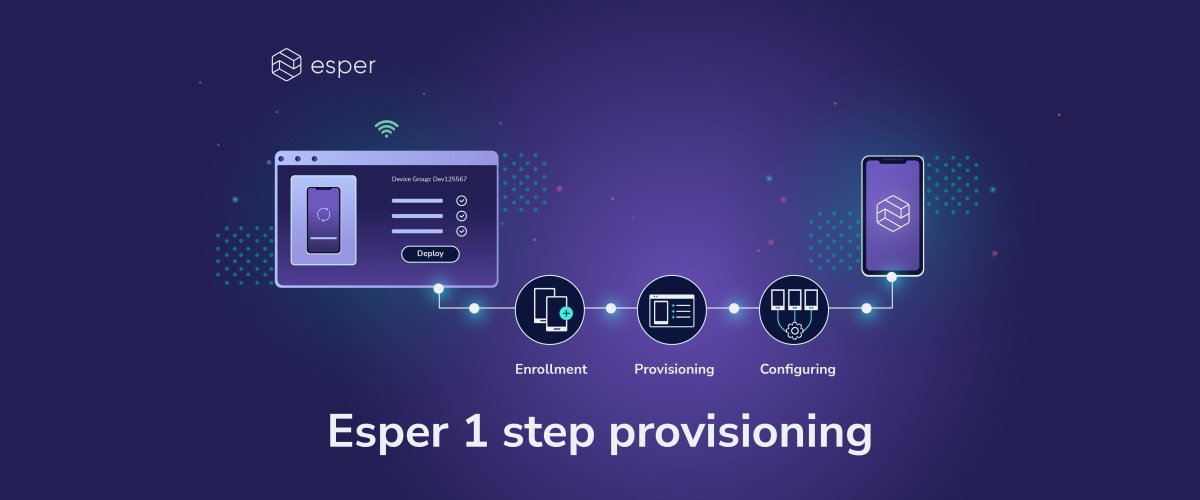
To simplify what could otherwise be a needlessly complicated process, we combine enrollment (onboarding), into automated edge device provisioning and configuration into one single step — once you start the onboarding process and the device is enrolled onto Esper, your provisioning blueprint will take over and do all the heavy lifting for you, including configuration. All you have to do is build the blueprint.

Step 1 in provisioning a device with Esper

Blueprints are simple yet dynamic starter kits for device enrollment that contain your chosen configurations, settings, and business apps. Each blueprint is auto-assigned a single QR code for the entire configuration set. Creating a blueprint takes about five minutes on average, and when you’re done, each blueprint can be reused as many times as you want. You don’t need to recreate configurations and settings for each device or download any apps to start onboarding.

By streamlining the enrollment, provisioning, and configuration processes, we were able to reduce onboarding time, avoid unnecessary app downloads, reduce repetitive actions, reduce the number of required steps, and ultimately simplify the onboarding process.

Learn More: Seamless Provisioning

More MDM Resources: 

FAQ

No items found.
No items found.

Keep Exploring

No items found.
Cam Summerson
Cam Summerson
Cam Summerson is the Director of Demand Generation at Esper, where he turns big ideas into bigger results. Before jumping into the world of B2B growth, he spent over a decade in tech journalism — five of those as Editor in Chief — digging deep into the guts of gadgets and the people who build them. Now, he leads the charge on Esper’s content engine, shaping strategy, crafting stories, and making sure every piece — from blog to ebook to campaign — is worth the scroll.
Cam Summerson
Learn about Esper mobile device management software for Android and iOS
Featured resource
Read more
Featured resource

Esper is Modern Device Management

For tablets, smartphones, kiosks, point of sale, IoT, and other Android, iOS, iPadOS, and Linux edge devices.
MDM Solutions